



The Luxury of Shopping Luxe Brands Online
- BY Vartika Rawat
 In
In  2519
2519 0
0
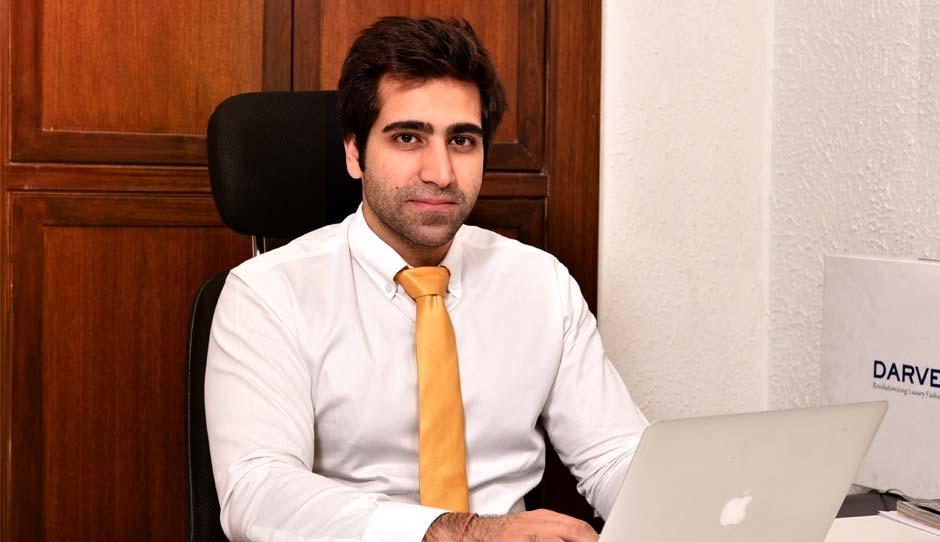
India’s fashion forward netizens are heading to Darvey’s for top of the line international luxury brands like D&G and Prada. CEO Darveys Nakul Bajaj shares with MYB how they are coping with 'nline' times.
If you love it buy it! That is the motto today and being able to do just that gives a high that is quite incomparable. You no longer need to defer your shopping of high street or off the ramp creations, with online boutiques delivering them right at your doorstep. From electronics, clothes, accessories or even a car, shopping online is among the fastest trends catching the fancy of average Joes and plain Janes in India. Factors like rise in country's disposable income, expansion of modern retailing and influence of western culture are boosting the luxury industry in India. The luxury brands across the globe which were not available in the country earlier are well within reach with ecommerce. In fact according to Associated Chambers of Commerce of India (Assocham) a trade association's 2015 report the online luxury stores are going to grow at nearly 25 per cent annually, which means Indians are likely to spend $35 billion on online luxury shopping by 2016 as compared to $8 billion in 2012.
Nakul Bajaj, CEO of Darveys.com, an online portal for luxury fashion brands feels that the “competition is really high” in this sector, especially when the International players are entering the Indian online market space–the third largest upcoming ecommerce market place in the world (according to the ASSOCHAM report 2015 and China has the largest online market). Of the 500 leading international luxury brands, only 30% have a presence in India. (Compare that China, which has 70%.) Between the country’s blooming economic, rising middle class, and favorable regulatory environment and FDI rules, India is an ideal market for luxury ecommerce.
Darveys is a gateway to more than 70 luxury brands and designer products which have been procured from more than 285 global boutiques thus giving the customers the option of allatone-place. The five year old company entered the online space at the initial stages of 'internet' being the next big thing for retailers. “Targeting the luxury market is not an easy nut to crack! Though Indian consumers as of late have been more vigilant about luxury brands,” says Bajaj who feels that ecommerce has revolutionised the entire shopping process.
Bajaj is a Delhite who completed his education from Emory University, United States and started working towards Darveys at the same. “One of the major reasons for me to study in Europe was Darveys,” he says. And throughout this journey the only mentor he had was his father. But the whole online process of buying, selling and procuring needs to have a strong back end.
This is the most challenging part as Bajaj points out. “Logistics in India is still not as developed as it should be considering the growth of ecommerce,” he says though in Darvey's case the average selling price being Rs 15,000 the percentage cost associated with the order is lower than the average percentage in the Indian market.
The other problem that the CEO highlights is integration of live inventory. As a result, there may be a clash when the same product is bought at the same time both online and offline by different consumers. The second issue is around lack of consumer awareness regarding brands that are yet to make their appearance in India in a big way. Here, “word of mouth plays a really important role in acquiring customers.”
Except for the above, communication barrier among the employees is also a hurdle. For that, Bajaj suggests that the administration should enforce a social collaboration solution that gives employees access to a single platform for communication. “This type of platform ensures the work and information sharing are smoothly integrated into an organisation's existing enterprise and productivity, allowing communication to take place when and where it's needed,” he adds.
What keeps him going though? Bajaj replies: First, being able to retail to entire country as the flagship stores have access to only a particular demographic. The second being able to provide thesame price for the luxury retail products as are available abroad accompanied with providing collections one is not able to ever buy in our country.
“The online luxury space in the country is an unexplored market and the demand in tier 2, tier 3 cities is incredible,” says Bajaj who’s future plans focus on increasing the range of boutiques, introducing more designer products and reaching out to untapped areas at most reasonable prices.







Add new comment