



Why Paras Shah Stopped Being the 'Nice Guy'
- BY Ira Swasti
 In
In  23885
23885 0
0
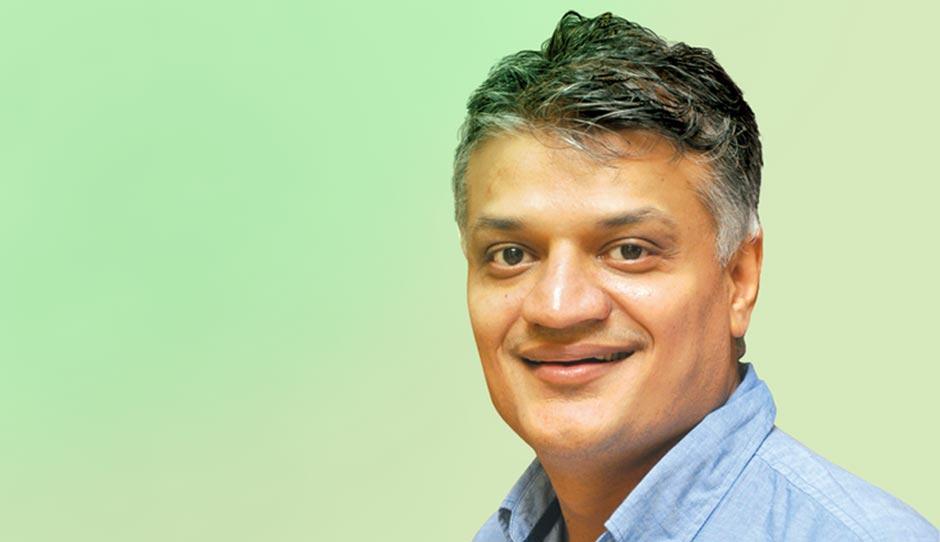
Growing up in a Gujarati business family, entrepreneurship was in Paras Shah’s veins. After completing his engineering from Case Western University, USA, when Shah returned to India in 1991, he was keen on bringing international technology standards to a nation which had abysmal PC and internet penetration back then. Thus was born the Mumbai-based Neoteric Infomatique, an IT services dealership. Over the past 21 years, Neoteric has grown into a Rs1,800-crore national IT distributor with 55 plus branches and more than 700 employees across 500 cities. Here, Shah talks about why a prudent businessman is one who keeps his emotions at bay in the office.
I hail from a Gujarati business family where both my parents always motivated me to have a never-say-die attitude and an indomitable spirit when doing business. My father instilled in me the penchant for undertaking calculated risks and embracing new challenges. It was this upbringing which inspired me to start Neoteric in 1991. I’ve been lucky to have both my parents as guides and mentors to me in business—my mother taught me the value of delegating both responsibilities and power.
Change is really the only constant. It’s the golden rule—adapt, or perish.
While running Neoteric, though, I realised that just empowering your employees to make decisions isn’t good enough. As a boss, one has to make sure that action and thought isn’t just driven by you, but to have a culture where employees are proactive, and motivated to grow the company. To be able to do this effectively, one needs to be careful to keep emotions aside. In the first 10 years of Neoteric, I didn’t do well on that count. My emotions reflected in my professional decisions, especially when the decisions were about people who had put in long tenures in the company. I found it difficult to segregate between personal and professional relationships. I liked being a “nice guy”, and would feel great when colleagues said that about me.
But, I realised soon enough that this nice guy image was proving to be a hindrance when the time came to make certain big decisions for the growth of the company. Some senior team members—those who enjoyed both decision-making powers and their colleagues’ support—were simply not taking decisions that would give us a lead in the industry. Plus, my emotional attachment to them was clouding my ability to evaluate such people properly—solely, on the basis of their competence. Once I realised that, it was important to change. I ensured that my emotions took a backseat, even when it meant letting long-serving employees go because they had become roadblocks in the company’s growth.
This wasn’t easy for me. In fact, letting such people go was one of the toughest decisions I had to take in my 21 year-long business journey. But, change is really the only constant. It’s the golden rule—adapt, or perish. Now, we try to bring on board the best people from the industry to mentor Neotericians, and make sure their decision making powers are aligned with action. For instance, Dr R. Srinivasan, an XLRI alumnus and an expert on diverse industries such as oil and gas, IT, steel, construction and consumer goods etc. has been an HR consultant with us for the last 10 years. We constantly try to make Neoteric the breeding ground for the best talent in the industry.






















Add new comment