



How Gautam Suri and Arvind Nanda Built Interarch
- BY Ira Swasti
 In
In  23726
23726 0
0
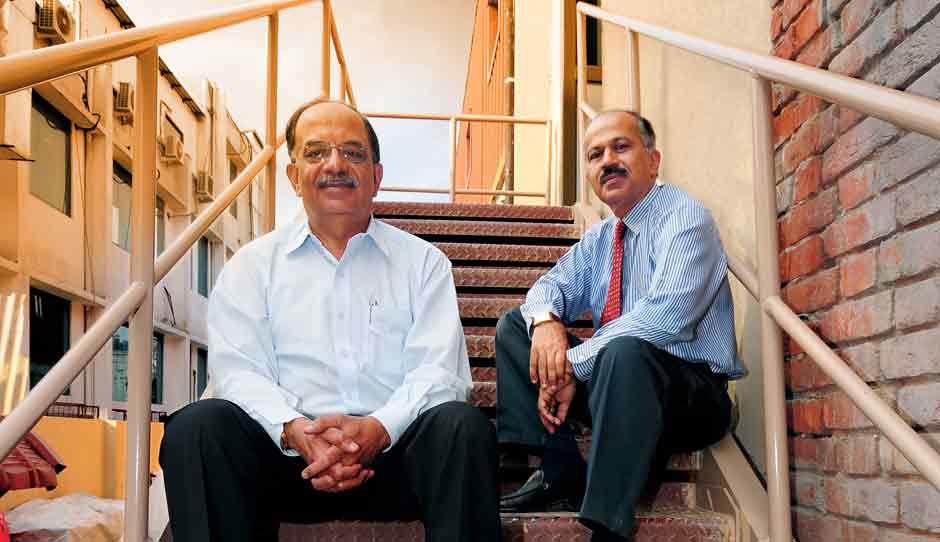
Twenty-nine years ago, an acoustic consultant and a chartered accountant got together to make loudspeakers. But fate had other plans for Gautam Suri and Arvind Nanda who saw a bigger opportunity in selling false ceilings when the New Delhi Indira Gandhi International Airport was announced in 1984. In the next two decades, their firm diversified into roofing systems, window coverings, and eventually, whole pre-engineered steel buildings. They did it all—from constructing airports and hangars for governments, to automobile plants and offices for clients like Reliance and Tata Motors. Today, the friends claim they’re not as aggresive in business as they used to be, yet their eyes are set on taking the Rs500-crore Interarch, global.
Gautam Suri (GS): I tasted entrepreneurship quite young. As a teenager, I used to make these specialised loudspeakers for my friends as a hobby, and they would pay me because these products were not available in India at the time. When I went to IIT Delhi for my mechanical engineering, I organised music concerts and events. These were profitable events, and I made some money out of them. It was then that I realised I could make money on my own. I didn’t need to get a job after college.
Arvind Nanda (AN): I first met Gautam in 1969 when he became friends with a very good friend of mine who was also my neighbour. I was still in school while he got into college that year. But, we used to meet each other quite often.
GS: Right after college, I started working with my father who had retired as an acoustics consultant with the AIR. After retirement, he continued to be a consultant, and would help design acoustics for industrial units, auditoriums and studios. I gave myself three years to see if I liked doing this. If not, I thought I would go work in the US. But I enjoyed the work and decided to stay back. Meanwhile, Arvind had returned from London after completing his CA and working there for six years.
AN: In 1979, I came back from the UK because I was offered a job in India that paid `1,600 per month. I thought it was a fantastic opportunity to learn because I was given independent charge of someone else’s company (it was a small export house and the owner was away for a while). Such chances don’t come to you all the time, especially at that age. Here, I got to do everything—from ensuring the toilets were clean, to keeping people happy, recruiting and firing staff, and bringing in more business. Luckily, that gentleman had offices in Hong Kong, Nigeria, Paris and London which gave me a lot of exposure to international practices as well.
Making money can’t be your only objective in business. If it is, you will never be successful.
GS: Through this phase—when I was working with my father, and Arvind was with the export house, we would meet once in a while. Every time we met, we would talk about starting something of our own. But we didn’t exactly know what we wanted to get into.
AN: Gradually, things started moving in a certain direction. After two years of working with the export house, I partnered with my cousin to start a garment exports business in 1982. A year later, we also diversified into electronics which was Gautam’s field. We asked him to join us. So, our first venture together was Intertech. Mainly, we manufactured HiFi and TV loudspeakers.
GS: Because there was a boom in the television space then, we did fairly well. But, it wasn’t really the kind of business we wanted. It was a high-volume, low-margin game. Plus, chasing payments was a hassle. Fortunately, a year later, the New Delhi International Airport was being constructed. Because of my contacts with the architectural community—through the projects I worked on as an acoustics engineer—I knew there was a requirement for false ceilings at the airport. Arvind and I discussed how we could become suppliers for this. We got in touch with Hunter Douglas, a Dutch company, and they agreed to make us their licensee in India. And that’s how we got into the false ceiling market. It was a big change for us. We were used to manufacturing speakers. Now, we were supplying a custom-designed, readymade architectural solution to a large Rs45-lakh project like the Delhi airport.
For Interarch, bagging the Rs180-crore project for the roofing system of IGI's Airport's terminal 3 was both a turning point, and the biggest learning.
AN: In the early 1980s, India was a closed country—imports were not allowed and duties were extremely high. Everyone just thought of doing something locally and making money. We wanted to stand apart. But, nobody knew about false ceilings in India then. We had to create a demand for it. Educating people was the key to selling. There was no way we would get orders without educating the market. I remember going to a customer once, and telling him that if he would install our ceilings, his factory roof wouldn’t leak. But he told me he didn’t really mind some leakage because all his factories leaked. He was just used to it.
Even as we were battling with this, there were other tough decisions to make. In 1989, my cousin completely took over the garments export business. He wasn’t really interested in loudspeakers. Gautam and I had a choice to make. We had limited space, factories and money but we knew that with our educational backgrounds and exposure, we were capable of doing something that nobody else had done in India before. We dropped Intertech—and with it our loudspeaker business—and founded Interarch. We wanted to focus on manufacturing false ceilings and other architectural products.
GS: Soon, we had expanded our offerings to window coverings which included Venetian and vertical blinds. We also tried to get Hunter Douglas to establish a manufacturing unit in India but they were not interested. So, we decided to break off and go on our own way. We wanted to make ceilings more competitive because imported products were very expensive. In early 1990, we got an opportunity to install a special roofing system in the Maldives. It was a new product line, and we didn’t know much about it. But we researched where we could get it, and found a company in Singapore to supply it to us. We worked on this project in the Maldives and were excited by the potential it offered.
Soon, we started manufacturing roofing systems ourselves. We set up a plant in Noida. It was our first, and also a first for manufacturing roofing systems in India. We also began thinking about diversifying upstream, i.e. if we do the roof, why don’t we do the whole building? We scoped out a lot of international players, and tried to sell pre-engineered buildings in India. But nobody showed much interest. In the late 90s, we decided to manufacture these buildings ourselves. We set up our own plant in Greater Noida in 2000 to manufacture a product line of roofing systems, false ceilings and pre-engineered steel buildings. Since then, things have been great. In the last decade, we’ve bagged many large projects including Tata Motors’ greenfield plant in Pantnagar, the IGI Airport Terminal 3 in New Delhi and the Air Deccan hangar in Bengaluru. These were all turning points for us. From Rs150 crore in turnover in 2005, we reached Rs400 crore in 2008.
AN: Not everybody thought we had the right idea, or we’d be this successful when we entered into pre-engineered buildings. The conventional wisdom was that India doesn’t need pre-engineered inputs like the West because labour was cheap here, and people were happy deploying and working with their own steel and labour. But, soon the benefits were obvious. Pre-engineered buildings are really like readymade shirts. Nobody bought readymade shirts earlier. They didn’t think these could offer good fits because only a tailor could stitch to somebody’s size. But, when readymade shirts came, everyone forgot about their tailors. Plus, people didn’t compare costs. It was about buying a brand. We approached our products the same way. With Interarch, people are sure of what they are buying.
GS: Building a brand takes time. When we began, we were two youngsters with no track record. We got many contracts, projects and financial help through personal connects with the people we worked with. It took us four to five years before we built real credibility, where people began to say that if these guys say they will deliver, they will.
AN: And in business, you always have to remember that just making money can’t be your objective. If it is, you will never be a good businessman. You have to build a strong foundation of values, systems and processes within your company. You can’t see these things on a balance sheet. But without them, you’ll never succeed. Yes, you need money to keep the financials strong. For example, when we had to expand in 2008—because we got a `180-crore project to build the roof for Terminal 3 of the New Delhi International Airport—we went for a private equity infusion. We didn’t want to burden the company with interest payments. Still, the three years from 2008-2010 were terrible for us. With the economic crisis, business was slow. Plus, we were hiring more people, and expanding to execute the Delhi airport project. But, because our finances were in a good position, we came out of it successfully. So, money is important but you can’t see it as an end objective. I learnt this 30 years ago from an Old Chinese saying—happiness and satisfaction in life is like a cat’s tail. Just like the cat can’t catch hold of its tail, when you chase happiness and satisfaction, it evades you. Once you let go and keep working towards your goal, the results follow.
We had limited space, factories and money but we knew we were capable of doing something that nobody else had done in India before." - Arvind Nanda
GS: We try to do just that at Interarch. We’re now a Rs500-crore company. We don’t have to prove our skill. But now people demand much more of us. They expect very high levels of delivery excellence and professionalism. Also, we’re not the only players anymore. We have competition from several multinationals. In many ways, we are their benchmark. When some of these companies came to India, they thought they could sell a cheaper version of what they provided globally, and it would be accepted here. We instead offered our clients best-of-breed products that were being sold and used in markets like the Middle East or the US.
AN: Over the last decade, our focus has been to professionalise and delegate more because all our factories have moved out of Delhi. I discourage employees from coming to me for every little decision now. If you’re constantly looking into the day-to-day activities of the business, you don’t get time to think of tomorrow and what the future of the company can be.
GS: Our next big goal is to take Interarch international. We’re looking for strategic partners to take it to the next level. But that will take another two to three years to take off. We also want to be a larger player in steel construction in India. Steel adds a lot of value to constructions—it makes buildings more durable and saves a lot of time. Right now, steel is not optimised in Indian infrastructure. It’s more an exception than the norm. But that has to change.























Add new comment