



Why Biostadt India Says No To Private Equity
- BY Shreyasi Singh
 In
In  16550
16550 0
0
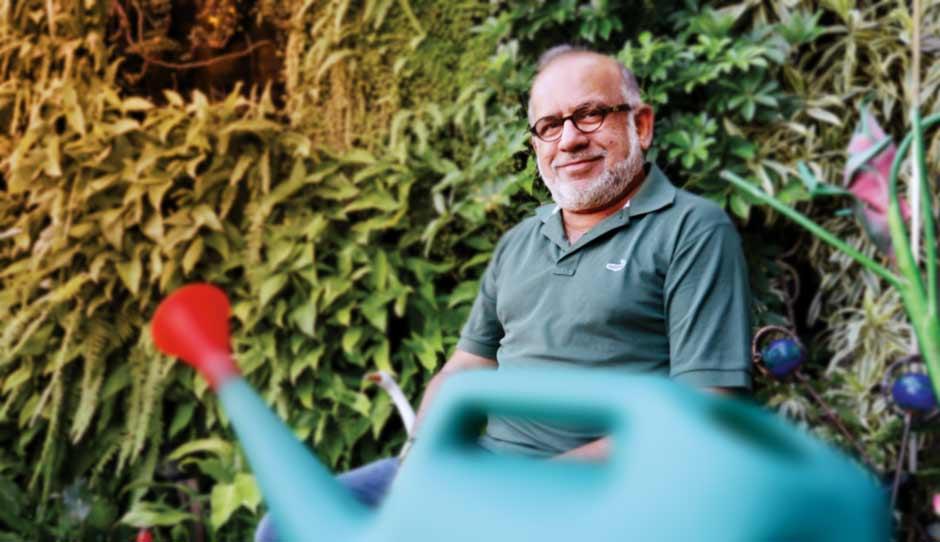
When it comes to business, Juzar S. Khorakiwala, chairman and managing director of Biostadt India, is truly to the manor born. His grandfather founded the seeds of the family business by opening Mumbai’s iconic Akbarally’s—India’s first department store—in 1956. The family was also behind the famous Mongini’s bakery. Khorakiwala shares some of that go-getter spirit. When the family business was restructured in 2002 (with the mega Wockhardt going to his cousin), Khorakiwala kept the Rs.60-crore agribusiness arm of the larger group. Today, that unit has grown into Biostadt India Ltd, a biotechnology-based agri inputs company which closed FY2013-2014 with more than Rs500 crores in sales, and over 3,000 distributors globally.
Business has been in my blood, as they say. I grew up in a joint family. My grandfather started the business 100 years ago with Akbarally’s. The family then got into pharmaceuticals in 1958. That foray eventually led to the establishment of Wockhardt, a pharmaceutical and biotechnology company, and has been over the years headed by my cousin Habil Khorakiwala.
When you’re part of a bigger group, finances and fiscal control are more obscure. Things come in to sharper focus as a standalone.
A variety of reasons pushed us to restructure the family’s businesses in 2002 between my uncle FT Khorakiwala’s family, and other cousins. We used to have an agri business arm called Biostadt Agrisciences which had revenues of about Rs60—70 crore in 2003. This business excited me. I was confident agribusinesses have a brighter future long-term. We demerged Biostadt Agrisciences from Wockhardt in June 2003, and it emerged as an independent company called Biostadt India Limited.
It wasn’t easy to begin anew with a company that people associated as part of the larger Wockhardt group. First, it had been part of a public company. We had to privatise it even before it could be hived off. Financially, things were not so healthy with this agri unit then. See, when you’re part of a bigger group, finances and fiscal control are more obscure. Things come in to sharper focus as a standalone. For a year or two after that, educating the market that we were a separate brand was a big challenge. I also had to create a new management team from scratch.
Personally, as well, it was a testing time. Having the umbrella of a larger family business unit gives one a lot of protection. In fact, a lot of people around me questioned if splitting away from the family business was a wise thing to do. But, I was clear—despite the initial anxieties and challenges—I just wanted to be on my own.

In the early 2000s, agricultural businesses were beset by stretched credit cycles, sometimes up to 250 days! Biostadt was no different. Plus, we had sales returns of up to 15-20 per cent. Nobody seemed to know what was going on. We realised distribution was the key to this business. We clamped down on some of our distributors and took the tough call to drop some distributors. We added several new distributors, people who had worked with global companies such as BASF, DuPont and Monsanto. Also, we put in systems and processes in place. Vigilant monitoring and tracking can fundamentally revive business and throw up new opportunities. Within two to three years, we had brought down the credit cycle to 90 days, and reduced sales returns to a more respectable two to three per cent.
Even as we did this, we increased capacity, first with a manufacturing setup in Jammu in 2004. We also built a factory in Silvassa the same year. We forayed into the growing business for seeds with a joint venture with Mahindra Hybrid for seeds. The next few years were paced with action and growth, including several acquisitions and mergers, such as an aqua culture business in Vietnam, a new division called InGene Organics to focus on horticulture crops, and setting up our government-accredited biological research lab in Aurangabad in 2007. In fact, by 2007, we were doing annual sales of more than Rs100 crore.
I think what has worked for us is our focus. We have created a culture of biologicals, not just crop protection chemicals. Biological stimulants are a tougher sells because farmers have to be convinced that the growth nutrient is working for their fields. He comes back only if he’s happy. At Biostadt, we are very proud that Biozyme, our flagship brand, is India’s largest selling plant growth stimulant. It is responsible for Rs150 crore in annual sales, and is one of the few Rs100 crore-plus brands in the Indian agro chemical industry.
 "I believe when you borrow money, there is a tendency to spend more easily. It’s similar with lofty valuation," says Khorakiwala
 We’ve also run a tight, merit driven, transparent and process-led company. A unique way in which we have embedded these virtues in our company is by identifying key people as growth champions. And, we have tracked their performance by their impact on the bottom line. Fifteen to 20 per cent of the variable is awarded to them on their bottom line contribution. We ask them to grow 20 per cent on the topline and 15 per cent on the bottomline. This is an extremely working capital intensive business. We’re also certain we don’t want to borrow from the banks to expand our facilities or grow new verticals. We need sustainable, quality growth otherwise there is neither any money for us to redistribute or to invest. This sharp focus on bottomline from all our senior managers has made Biostadt very disciplined financially.
The way we disburse their variables had also helped us establish management stability. The amount is paid in three years. If they leave in the middle, they forfeit the amount. Initially, there was much resistance. We worked hard to convince them why we were doing it—we wanted to put a cost of leaving the company. This might sound very removed from modern day HR practices but it has actually brought in a lot of transparency in the organisation—we don’t beat around the bush about why we’ve done this. One thing that gives me great pride is that we have been able to open up the China market. Selling a product to the Chinese is like selling ice to Eskimos! We entered China with a Japanese JV. We weren’t prepared for what happened—within months they copied our products! They really can make fakes of everything. But, we survived that. Today, we are seeing almost 50 per cent growth in our sales in China. I would reckon, after Bangladesh where the global giant Syngenta markets our products, China is our second largest export market even though we only sell one of our product groups there. My younger son is now planning to move his base to China, and work out of there to convert these prospects.
In the next three years, we want to be Rs1,000 crore in revenues—it should be very, very possible. There are no special, mega plans to get there. That is not who we are as a company. Over the past 12 years, we’ve always taken baby steps in a new area. We learn, and then we act. I’m not somebody who likes to make big moves, and fall flat. I know venture capital is the way companies are built now, and you spend before you earn is the new way, but I believe when you borrow money, there is a tendency to spend more easily. It’s similar with lofty valuations. People disagree with me about private equity funding. But, honestly, I just don’t understand the conversations about multiples of returns. Sustained, stable growth is what we are driven by. We can reach our next milestone the same way. If we keep on growing at a modest and sustainable 20 per cent year on year, it’s good enough to get us to our goals.
























Add new comment