



Raising a Toast to India's First Single Malt Whiskey
- BY Ira Swasti
 In
In  20704
20704 0
0
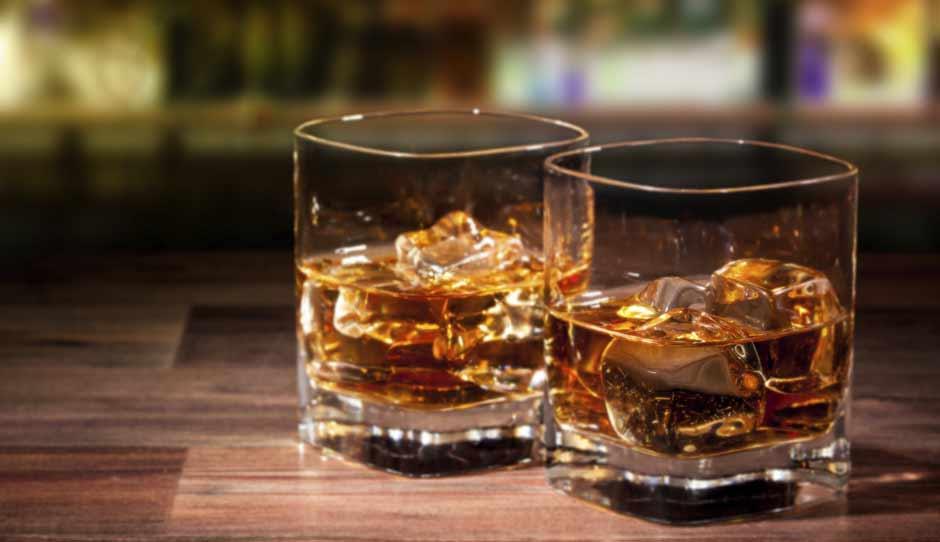
Neelakanta Jagdale’s Bangalore-based family business Amrut Distilleries produces about 10 variants of single malt whiskey. But, it is Amrut Fusion, the company’s first brand of single malt, launched in 2003, that got the world’s whiskey connoisseurs to sit up and take notice. But the recognition didn’t come easy. While the Jagdales knew they had a winning spirit in their oak barrels, their journey of making Indian whiskey noticed internationally was akin to walking on thin ice.
The Moment
It had been an exhausting day in a London hotel in 2007 for N.R. Jagdale, the chairman and managing director of Amrut Distilleries, and his son Rakshit, the company’s executive director. Their meeting with a potential distributor for Fusion, Amrut’s first brand of single malt, and its most ambitious project till date, hadn’t gone as planned. The distributor had gone back on his word to sell Fusion in London. Jagdale Senior and his son decided to take a walk to Tavistock Square (that had once housed the noted British author Charles Dickens and his family) to blow off some steam.
Unknown to both, that conversation was going to be one of the most important turning points in the company’s history. The company had barely sold 2,000 cases of Amrut’s single malt whiskey in the UK since its launch in 2003 but had spent a considerable amount on marketing the product. Jagdale Sr. recalls that conversation from six years back.

Sitting on a bench in the park, the then 54-year-old had asked his son if they should even continue to try and sell Fusion in Europe. Wouldn’t giving up be the smarter decision in this case, he wondered out aloud. For one, there was an unpaid rent on the company’s Glasgow office and continuing with the project meant losing much more money marketing Indian whiskey in nations where palates were used to Scotland’s finest. Jagdale knew it wasn’t financially prudent to spend money at this rate.
But, Rakshit assured him otherwise, and asked for more time. He was confident they could turn things around. Jagdale Sr. confesses now what he thought then—that his son’s misplaced optimism was merely young blood talking. Yet, a seemingly serendipitous moment—seeing a 1968-statue of Mahatma Gandhi built in the centre of the Tavistock Gardens—struck a strange chord.
“I don’t know if it was right or wrong to talk about liquor in front of the man who was a strict teetotaller and vehemently opposed alcohol. But, it got me thinking—what would have happened if Gandhi too had gone back on what he had intended to do,” Jagdale says. “I was just worried about losing some money on a project. But then I realised if we failed to establish an Indian whiskey brand abroad, it would mean much more to the reputation of the country’s liquor industry.”
Jagdale told his son to continue working on the project full steam and promised he’d arrange for more funds. While the Jagdales refuse to reveal the exact amount invested in Fusion’s marketing efforts before and after that moment in Tavistock Gardens, they have invested upto Rs12 crore in building the Fusion brand since its inception.
The Beginning
Neelakanta R. Jagdale had learnt the basics of blending liquor at home from his chemist father J.N.R Jagdale who had started Amrut Distilleries in 1948. Jagdale had joined the family business in 1972 and had to take over the reins of the company only four years later because of his father’s untimely death. Amrut, back then, used to produce rum and brandy for the Indian armed forces as well as the general market. It was not until the 1980s that the company started producing malt whiskey.
I was just worried about losing some money on a project. But then I realised if we failed to establish an Indian whiskey brand abroad, it would mean much more to the reputation of the country’s liquor industry.” -N.R Jagdale
N.R. Jagdale had been running the business at the conservative levels of growth that the closed Indian economy allowed in the days of the licence raj regime. It was in 1991 that things really took off; when the domestic economy opened up overnight. From protected markets, the industry had to suddenly face the challenge of international players with popular brands and deep pockets entering the market.
While Amrut was already making malt whiskey, it was only used to making the blended variety. “With the economy opening, we had to ask ourselves if could develop a product that was of international quality. Making India’s first single malt whiskey was more of a need to survive than anything else at that time,” Jagdale says.
Of course, liberalisation brought in several perks too. For one, Amrut got better access to fermentation, distillation and maturation technologies from abroad as well as consultants from Scotland to refine its manufacturing process; whether it was yeast technology, newer methods and temperatures of fermenting, or different times and maturation barrels for its various liquor products. The government had also categorised liquor under the foods processing industry by then, giving it more acceptance in the home market. After more than 10 years of R&D, Amrut was finally successful in launching the first Indian-made single malt whiskey in Glasgow, UK, in 2003. As several connoisseur tastings will certify later on, Amrut had got its product right. But distribution was still going to be a challenge.
The Brand
Rakshit Jagdale was pursuing his MBA at the University of Newcastle upon Tyne, New England in 2002 when his father asked him to do his dissertation on Amrut’s marketing of its single malt whiskey in the UK. Having worked in the family business for two years in Bangalore before his MBA, Rakshit was excited at the prospect. “I thought we could tap into the wide Indian diaspora in the UK and pitch our single malt whiskey to Indian restaurants and pubs in Birmingham, Manchester, Glasgow and Edinburgh,” Rakshit says.
 Says N R Jagdale“I don’t know if we have achieved success yet. You arrive at a point on the journey to success and then you realise you have to go to another point to feel successful.”
 He imported some select samples of the whiskey from India and showcased the brand in several whiskey shows and exhibitions in the UK along with Amrut’s marketing head Ashok Chokalingam. During his surveys, Rakshit once convinced Ken Storrie, the owner of the multi-award winning pub Pot Still in Glasgow to slip the whiskey as blind tasting malt to his customers, many of whom mistook the whiskey to be 15-year-old Scottish malt. “Their jaws dropped when they came to know it was from India,” Rakshit recollects.
But even as customers and connoisseurs appreciated the whiskey, Amrut was cautious never to compare its whiskies with Scottish malt. “Scotland has a 400-year-old history on their side while we have a 100-year-old history of distillation in India. There’s no match,” Jagdale Sr says. Mean-while, poor response from Indian restaurants in the UK continued. “It had been four years since the whiskey’s Glasgow launch in an Indian restaurant called Café India and we were still struggling to get distributors,” Rakshit says. “In fact, a distributor from London who had earlier shown interest in Amrut had also backed out.” The conversation with his father in Tavistock Square had instilled in Rakshit a new enthusiasm and determination. He decided to change track, and try a different strategy. Jagdale Jr and Ashok Chokalingam, their UK marketing head, decided to spread their wings and sell their whiskey to specialty whiskey and cigar shops across Western Europe, at £40 a bottle. Here, Fusion found a niche, and received a great reception from lovers of exotic whiskies. What was earlier a negative marketing strategy for Amrut—the foreign card— became its primary advantage. In that year, sales of Fusion doubled to about 4,000- 5,000 cases. Also, the Jagdales were soon approached by a distributor in Canada to sell their whiskey there at $80 a bottle. After a good reception in Canada, Fusion entered the US market in 2008.
Two years later, Amrut finally launched its single malt whiskey in India, albeit only in Karnataka. The move to launch in India late was deliberate, says Rakshit. “We knew Scotch-loving Indians would not have readily accepted an Indian malt whiskey in 2004,” he says. The Jagdales needed to build a strong international brand before launching it at home. The same year, renowned British whiskey critic Jim Murray rated Amrut’s single malt whiskey as the third best in the world in his annual whiskey guide Whiskey Bible 2010. “An Englishman tasting an Indian whiskey and rating it as amongst the top three in the world was noteworthy,” Jagdale says.
Today, the company sells 16,000 cases in 22 countries around the world. Their focus areas of growth now are closer to their production units in Bangalore—Jagdales are aiming to get Fusion going in Maharashtra and Andhra Pradesh. But Jagdale Sr confesses there is still a long way to go. “I don’t know if we have achieved success yet. You arrive at a point on the journey to success and then you realise you have to go to another point to feel successful.”























Add new comment