



Quikr's Marketing Strategy: Missed Calls for Massive Profits
- BY Sonal Khetarpal
 In
In  13525
13525 0
0
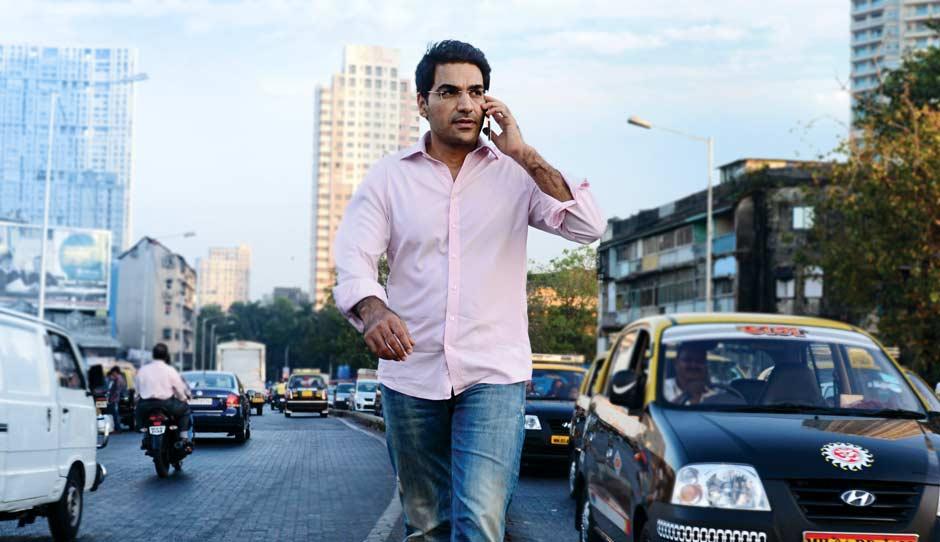
With a simple (and, inspired) tweak of marketing strategy, Pranay Chulet, founder of online and mobile classifieds portal Quikr, got three crore Indians to use his website every month.
While working in New York for management consulting bigwigs Booz & Co and Mitchell Madison Group, I saw how the print classifieds business was severely demolished by the digital classifieds. I was certain a similar trend would follow in India too. So, I moved back to India and started Quikr in 2008. Only five to seven per cent of the population in India, at that time, was online. Initially, I wanted to focus on that group. So, in the first three years we promoted Quikr through online advertising, mostly with Google Ads. Advertising on a mass medium such as television wasn’t an option then. We wanted to grow the volume of ad listings before we started mass media advertising.
It was in June 2011 when we had around nine million visitors on our portal that we started mass media advertising. We hired the advertising company Scarecrow Communications. Initially we concentrated more on informational advertising, telling people who we are and what we do. Doing that helped us increase our users to more than 11 million visitors in a couple of months, most of whom were regular internet users. But, we knew the real game was in capturing non-internet users. For non-internet users, the personal element of a commercial transaction is an absolute must. They can’t buy the product without a physical touch-and-feel, a voice, or a person on the other end. The ubiquitous mobile phone could drive this for us, we realised.
From a business point of view, it was cost-effective because calling users on their mobile is cheaper than when users call us on a toll free line.
That’s how our “missed call” idea came up. Missed calls are a uniquely Indian phenomenon. Through the campaign, people could give us missed calls instead of logging on to our website. Our call centre would then call them back and assist them to find, rent, sell or buy any product or service. The rationale behind the campaign was spot-on—missed calls are free so low income groups would prefer it. Higher income people would like its convenience. From a business point of view, it was cost-effective because calling users on their mobile is cheaper than when users call us on a toll free line. The campaign had other benefits we hadn’t anticipated. Talking to users helped us get direct feedback. Also, conversion rates of an ad being listed are higher when we have conversations with people.

Our creative, the Bob Biswas advertisement, also hugely helped the campaign become successful. The ad starts with a character named Bob Biswas (enacted by Saswata Chatterjee who played the assassin in the movie Kahaani) who starts stripping to get the crowd’s attention in a busy cafe. His objective—to announce an apartment he’d like to rent. An onlooker comes up with the campaign’s tagline—“Quikr ko missed call maar na.” After we aired this ad, we were flooded with missed calls. We had staffed our call centre with 25 people but we still couldn’t fulfil the deluge of calls we got.
Thanks to this great response, we increased the number of “missed call” ads over our repertoire of informational ads on television. We added new creatives to the missed call campaign, including the “Riot film” in February 2013 where a police inspector appeals to a rioting mob to buy his household stuff as he has been transferred. One of the stunned rioters then asks him to give Quikr a missed call. All our ads have a common theme—they reaffirm Quikr’s image as a quirky brand, and use characters or themes that are very Indian. Today, we have more than 30 million users a month. In fact, we can proudly claim that one in every five internet users in India has used Quikr at least once.
























Add new comment